
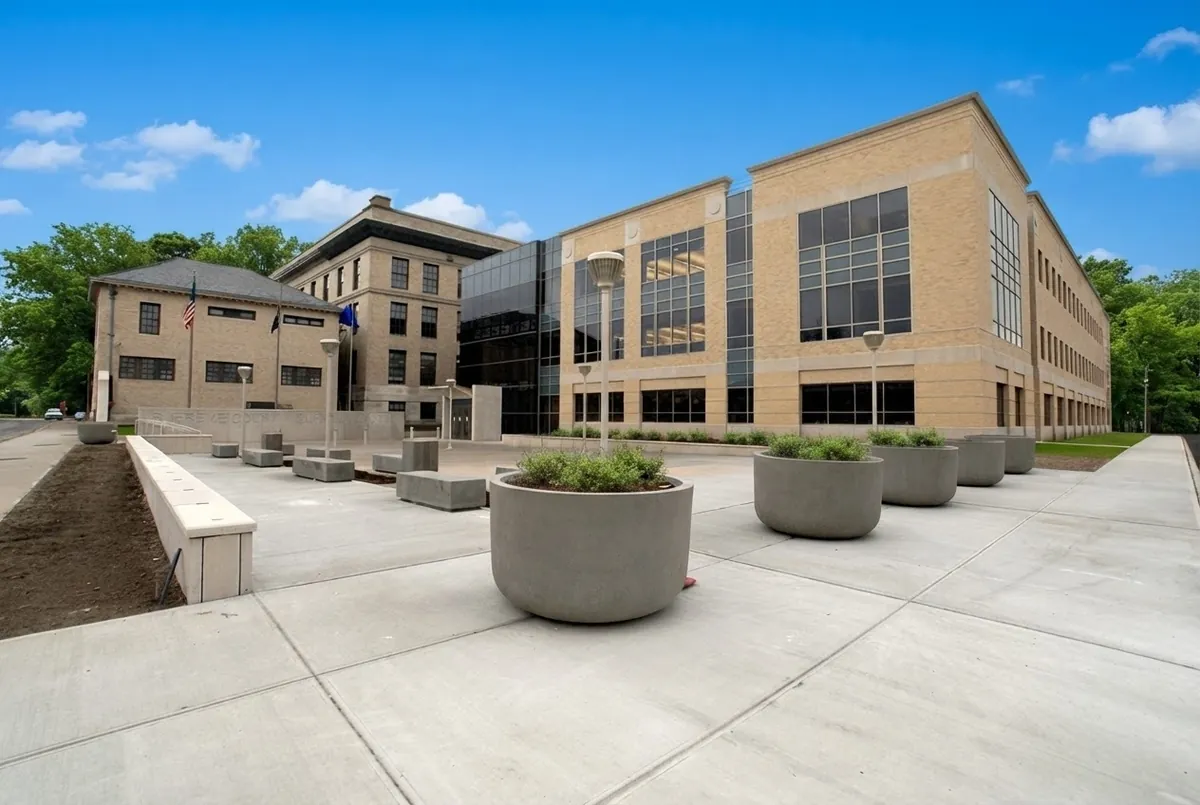
Court records of Suffolk County in the state of New York are maintained by the county court clerk and are accessible through online tools, official court portals, and directly at the clerk's office. SuffolkCourt.us is a convenient resource for searching public information about court records in this county. Additionally, you can use the New York State Unified Court System (NYS Unified Court System) portal, visit the clerk's office in person or call, and check data through state criminal record databases.
Suffolk Court System Overview
Suffolk County is part of the 10th judicial district of New York State, which also includes Nassau County. The county courts operate within the framework of the New York State Unified Court System, administered by the Chief Administrative Judge of the state. At the local level, the 10th judicial district is managed by the county's administrative judge.
In Suffolk County, there are several levels of courts—from the Supreme Court (the highest level of general jurisdiction at the state level) to the District Court, which handles less serious criminal and civil cases. Additionally, there are the Surrogate's Court, Family Court, and Court of Claims. The main building of the Supreme Court is located at:
Courts Serving Suffolk
Residents of the county are served by several courts of different jurisdictions. Below are the main ones.
| Court | Address | Phone |
|---|---|---|
| Suffolk County Supreme Court | 1 Court Street, Riverhead, NY 11901 | (631) 852-2333 |
| Suffolk County District Court | 400 Carleton Avenue, Central Islip, NY 11722 | (631) 853-7500 |
| Suffolk County Surrogate's Court | 320 Center Drive, Riverhead, NY 11901 | (631) 852-1745 |
| Suffolk County Family Court | 400 Carleton Avenue, Central Islip, NY 11722 | (631) 853-4375 |
| U.S. District Court, Eastern District of New York | 100 Federal Plaza, Central Islip, NY 11722 | (631) 712-6000 |
| U.S. Bankruptcy Court, Eastern District of New York | 290 Federal Plaza, Central Islip, NY 11722 | (631) 712-6200 |
Besides the listed ones, numerous Town Justice Courts and Village Justice Courts operate within the county—local courts that handle minor offenses and traffic violations at the level of individual towns and villages.
What Types of Cases Suffolk Courts Hear
The county courts handle a wide range of cases. Here is a brief list of the main categories:
- Felonies and misdemeanors
- Violations and infractions
- Civil claims—from small amounts to large commercial disputes
- Small claims cases
- Family law: divorce, custody, child support
- Probate cases, guardianship, trust management
- Juvenile and child protection cases
- Adoption
- Traffic violations
A detailed distribution among the courts is described in the following sections.
District Court Cases in Suffolk
The Suffolk County District Court is one of the few county courts in New York State that exist outside of New York City. It handles criminal cases where the punishment does not exceed one year of imprisonment: misdemeanors, violations, and some other offenses. Civil claims up to $15,000 also fall here, as do small claims cases up to $5,000.
Cases are initiated by the filing of an indictment by the prosecutor or a civil claim by the plaintiff. A judge is appointed according to the internal schedule. Preliminary hearings in criminal cases (arraignment) usually occur within 24 hours of arrest. The District Court also conducts preliminary hearings in felony cases, after which the case is transferred to the Supreme Court.
Magistrate Court Cases in Suffolk
In New York State, at the Suffolk County level, the function of magistrate courts is performed by Town Justice Courts and Village Justice Courts. These courts have jurisdiction over:
- Minor offenses and violations of local ordinances
- Traffic violations
- Misdemeanors committed within the respective town or village
- Preliminary hearings in felony cases
- Civil claims up to $3,000 (small claims—up to $5,000 in some courts)
DUI cases (driving under the influence) start here—with arraignment and preliminary hearings. If the case involves a felony, the local judge conducts a preliminary hearing and transfers it to the County Court or Supreme Court. There are over 30 such local courts in Suffolk County, each serving a specific area.
Family Law, Probate, and Juvenile Matters in Suffolk
Family Law
Divorce and complex property disputes are handled by the Supreme Court. However, cases regarding custody, child support, protective orders, paternity establishment, and termination of parental rights fall under the jurisdiction of the Family Court. Both courts are located in Central Islip.
Probate Cases
The Surrogate's Court in Riverhead handles probate cases: probate of wills, appointment of guardians, trust management, and estate administration. If the heirs cannot reach an agreement, the court schedules a hearing to resolve the dispute.
Juvenile Cases
The Family Court also handles juvenile cases—from offenses to child protection proceedings. Juvenile case records are confidential according to New York State law. For information, contact the Family Court office at (631) 853-4375.
How Cases Move Through the Suffolk Court System
- Filing a case. A criminal case begins with an indictment or arrest; a civil case—with the filing of a complaint; a family or probate case—with a petition.
- Assignment of a judge. The clerk's office assigns the case to the appropriate judge according to the internal schedule.
- Initial hearing. In criminal cases—arraignment; in civil cases—scheduling conference.
- Pre-trial phase. Parties exchange evidence (discovery), file motions. In criminal cases, plea negotiations are possible.
- Case trial. A jury or judge renders a verdict; in civil cases, settlement or default judgment is possible.
- Post-decision. Criminal cases—sentencing; civil cases—enforcement of judgment. Both parties have the right to appeal to the Appellate Division, Second Department.
Court Administration, Local Rules, and Public Access in Suffolk
The courts of the 10th judicial district are administered by the county's administrative judge under the general supervision of the New York State Office of Court Administration (OCA). Local rules for Suffolk County courts are published on the NYS Unified Court System website—including rules for the Supreme Court, District Court, and Surrogate's Court.
According to New York State Judiciary Law, most court records are public. Exceptions apply to juvenile cases, sealed records, and some family cases. To obtain a copy of a court document, contact the office of the respective court—a fee is charged for certified copies.
Hearings are open to the public unless the judge decides otherwise. Some courts offer remote participation via video link—confirm this with the specific court office before the hearing date.
Court Records and Related Court Resources in Suffolk
- Online case search. The NYS eCourts system provides access to information about Supreme Court and other state court cases through the WebCivil Supreme and WebCriminal portals.
- Court hearing calendar. The schedule of sessions is available on the NYS eCourts portal or directly at the office of the respective court.
- Forms and self-help resources. The NYS Unified Court System publishes court forms for civil, family, and probate cases on its official website.
- Clerk's office. To request public records, contact the Suffolk County Clerk's Office at 310 Center Drive, Riverhead, NY 11901, phone (631) 852-2000.
- Inmate search. Incarcerated Lookup on the NYS DOCCS website allows you to find individuals in state correctional facilities. For local facilities, use the Commission of Correction locator.
- Sex offender registry. The Division of Criminal Justice Services maintains the public sex offender registry of New York State.
- Criminal history check. DCJS Criminal History Records is the official resource for checking criminal records and conducting background checks.
- Property records and taxes. The Suffolk County GIS Viewer helps find information about land parcels. Real estate tax questions can be clarified through NYS Real Property Tax or local offices, such as the Receiver of Taxes in Brookhaven.
- Unclaimed funds. The Office of the NYS Comptroller allows you to check if you have unclaimed funds.
- Additional information. SuffolkCourt.us offers consolidated information about county court records and links to official resources.